


An online company store works when the shelf behind it is real, the redemption rules are set, and someone else does the shipping.
An online company store is a branded storefront where employees, sales reps or customers request or buy your merchandise from inventory you already hold. Nobody emails the person who keeps the closet. The store replaces spreadsheets and order forms with a catalog, a redemption rule and a shipment that someone else packs.
Company stores come in three types, and the type decides most of the setup: an employee swag store, a procurement portal for teams and locations, and a public storefront that sells to fans.
Key Takeaways
- Pick the store type first; it sets who gets access and whether people redeem a code, spend a credit or pay.
- Charging employees is possible on any platform and rarely worth the tax and refund overhead.
- A store is only as useful as the inventory and fulfillment behind it, so the features to insist on are a live catalog, kits, budget tracking and reporting.
- Stock a short list of items people already want.
- Company swag stores come with the Enterprise plan on Swag Pro; request a demo to see one built for your teams.
What are the three types of online company stores?
Each type of online company store answers who logs in and how they redeem, and a company can run more than one at a time.
- Employee swag store. Staff choose what fits them, from a catalog you curate, using a voucher code or store credit you issue. It doubles as a reward channel: a credit for a work anniversary or a job well done, redeemed on the employee’s own schedule.
- Procurement portal. A centralized source of truth for uniforms and gear across multiple locations or teams. Each location orders from the approved list.
- Public storefront. A polished store that sells your merch to customers and fans. This is the one type where purchases are the point, and it fits companies with a strong brand identity and a loyal following.
MuleSoft’s online company store, pictured below, is one example of the format. Our company swag stores page describes all three types and how access and redemption differ between them.

What are the benefits of an online company store?
The benefits of an online company store are fewer one-off orders, one catalog for every location, and recognition employees choose for themselves.
- Easy management. Backed by a swag management platform, the store handles requests, inventory and shipping, so a swag store for internal teams is easy to manage without one coordinator running it by hand. Our swag management guide explains the platform side.
- Recognition that reaches people. Gallup and Workhuman found in 2024 that only 22% of employees report receiving appropriate recognition for their work, and that well-recognized employees are 45% less likely to have turned over after two years. A store credit is recognition the employee chooses how to spend.
- Brand consistency. Every location and every rep pulls from the same approved catalog, so the logo, the colors and the quality match from office to office.
- No inventory on site. The merchandise lives in a fulfillment center.
- Control over spending. Vouchers and credits replace one-off orders and the bulk order that sits in a closet.
- Flexibility for the people using it. Employees and reps order when they need something, in their own size, without asking.
Should you charge employees for company swag?
Charging employees for company swag is possible on almost any store and usually a poor idea. Few people will pay full price for merchandise with their employer’s logo on it, and being asked to can leave a bad taste. A sales rep who needs shirts for a trade show should not have to buy them and file for reimbursement. Charging also adds taxes, third-party payments and refunds to a process the store was meant to simplify.
The exception is a company whose people are genuinely attached to the brand, where a public storefront that accepts payment works. For everyone else, vouchers and store credits keep the spending decision with you: who gets what, how much, and how often.
What are the key features of an online company store?
Insist on five features in an online company store: a browsable catalog, kits, budgets with procurement integration, reporting, and the fulfillment behind it.
- A catalog people can browse in a minute. Clear categories and search, with product names and descriptions written for your audience rather than copied from a supplier.
- Kits. A new-hire or new-customer kit built from the same inventory, so onboarding runs through the store. Our swag kits are assembled in the warehouse and branded inside and out.
- Budgets and procurement integration. Orders charged against a department budget or purchase order, with a running view of who has spent what. Larger companies also want the store to talk to accounting, spend management, punchout and procurement systems.
- Data and reporting. Inventory levels, which items get redeemed, and spend against budget. Those numbers decide the next order.
- Fulfillment behind the store. Someone has to pick, pack, ship and handle returns; ask who does it before you sign.
What should you stock in a company swag store?
Stock a company swag store with a short list of quality items people already ask for, then let the redemption data tell you what to add. The five attributes of swag that works (represents the brand, useful, lasting, drives the right behavior, meets an objective) are the filter. For the categories, think apparel such as polos, sweaters and hats, health and wellness items, tech such as headphones and chargers, eco-friendly bottles and bags, and drinkware. Our list of unique swag ideas has the less expected picks, from hand-dipped mugs to custom shoes.

For an employee store’s first season, take a look at three picks that cover the jacket, the polo and the mug: the Eddie Bauer sweater fleece full-zip jacket, the Nike Dri-FIT pique polo and the S’well mug with handle.
Eddie Bauer Sweater Fleece Full-Zip Jacket (Men’s/Unisex)
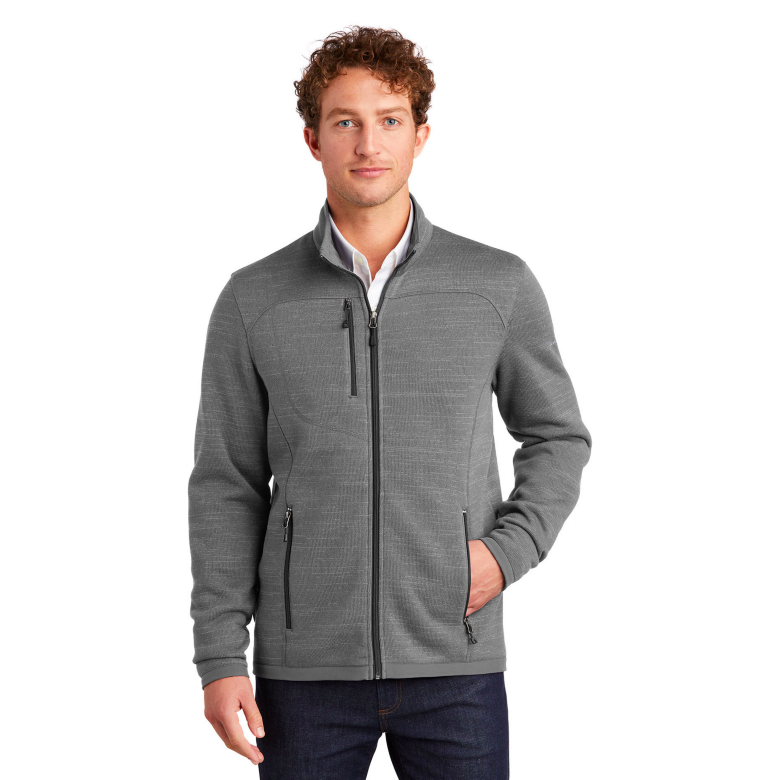
- A retail-brand layer that gets redeemed first when the weather turns
- Three colors: Black, Dark Grey Heather and River Blue Navy Heather
- Approximately 12 to 15 business days to produce
Nike Unisex Dri-FIT Pique 2.0 Polo Shirt
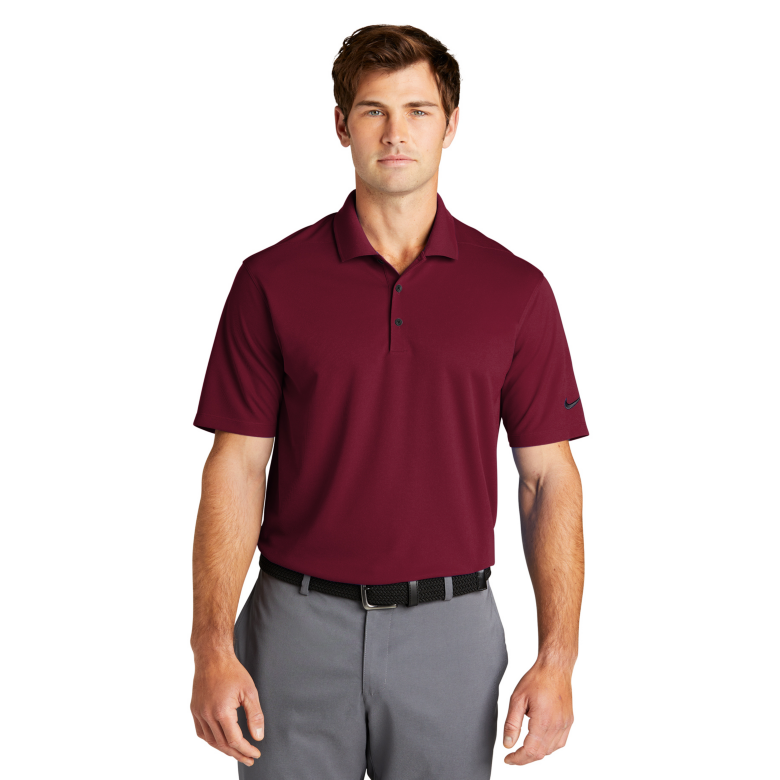
- The polo slot in an employee store, in a size and color each person picks
- A wide colorway range, including Navy, Game Royal, Team Red and Cool Grey
- A Nike retail brand in a Dri-FIT pique knit
S’well Mug with Handle (16 oz)
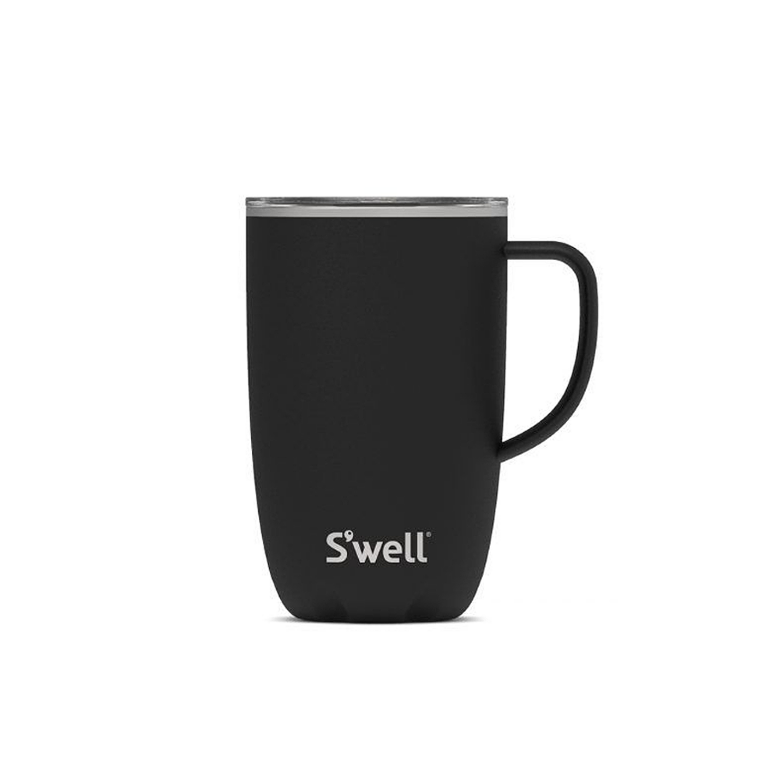
- A desk mug that travels: splash-proof slide-open lid and a handle that fits most cupholders
- Three colors: Angel Food, Onyx and Teakwood
- Approximately 10 business days to produce
How does an online company store work for the people using it?
An online company store works by giving each group its own door and running every order through the same warehouse.
- Log in through your group’s door. Employees see the employee store, locations see the procurement portal, and fans see the public storefront. You decide which groups see which store, and several stores can draw on one inventory.
- Redeem or request. An employee redeems a voucher or store credit in their size. A rep or a customer success manager requests items to send to an account or carry to an event. A fan pays at checkout.
- Get the approval where one applies. A manager can approve a rep’s store order before it ships.
- Let the warehouse take it from there. The item is picked, packed and shipped, tracking updates in real time, and the inventory count drops by one.
Reps who carry swag to events pull from the same store. Our guide to trade show giveaways covers what to hand out by category and how to run trade show swag at scale.
How do you create an online company store?
You create an online company store by deciding who it serves before you decide what it sells.
- Decide who the store serves and what it is for. Rewards for employees, gear for locations, merch for fans, or a request desk for reps. The answer picks the store type and the redemption rule.
- Source products that fit that audience. A developer-focused company stocks the clever t-shirt. New Relic offered its Data Nerd tee to trial signups who installed the product, and qualified leads rose 30%.
- Set the redemption rules. One redemption method per store, the department budget behind it, and who approves a rep’s order.
- Build the store and load the inventory. Load the catalog and brand the storefront. If a single team wants a self-serve route, the Shopify integration at Swag.com company stores adds storage, distribution and auto-replenish to a Shopify storefront.
- Test it on the devices people will use. Redeem a voucher, request an item as a rep, place a purchase, and check what the emails and tracking look like.
- Launch with the rules attached. Share the store with the groups who have access, state what each credit covers and how often it renews, and name who to ask when something is out of stock.
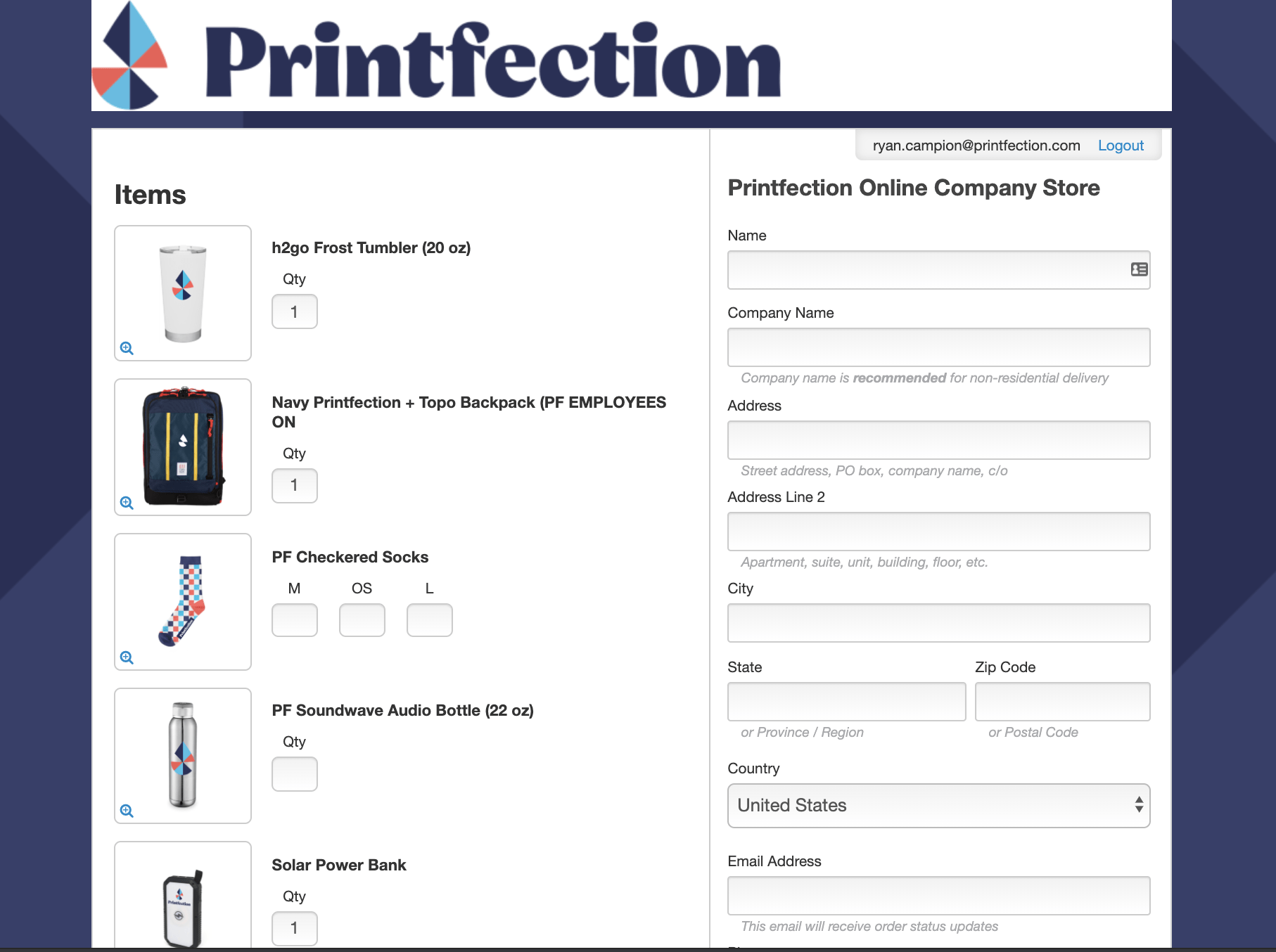
Storefronts are one of the five pillars in our guide on how to build a corporate swag program, alongside sourcing, storage, distribution and analytics.
How does Swag Pro run a company swag store?
Swag Pro runs company swag stores as an Enterprise plan feature on top of the inventory we already hold for you, so corporate swag store management stays in the same platform as the rest of your program.
- Choose the products and the branding. Pick items from your stored inventory, add your logo, colors and messaging, and edit product names and descriptions for the audience. Your account manager and merch pro help plan the list.
- Set the redemption rules. Voucher codes, store credits or purchases, and the budgets behind them.
- Open as many stores as you have audiences. One company can run separate stores for different teams, departments or campaigns, each with its own access.
- Leave the fulfillment to us. We store it in our fulfillment center, pack, ship, track and handle returns and support.
Our employee appreciation page shows where a store fits next to onboarding kits and milestone gifts, and the plan structure lists what Enterprise includes.
Ready to open a company swag store?
Tell us who should be able to log in and what they should be able to redeem. In a demo we walk through a store built for that setup, from the catalog to the first shipment.
FAQs About Online Company Stores
What is the difference between an employee swag store and a procurement portal?
An employee swag store lets individual employees choose items for themselves with a voucher or store credit, often as a reward. A procurement portal serves teams and locations that order uniforms and gear from an approved list. On Swag Pro both are company swag stores with different access and redemption settings, and a company can run both.
Are company-branded swag stores a waste of money?
A company-branded swag store wastes money when it stocks items nobody chose and nobody wears. It pays off when people pick their own size and style and the stock ships from a fulfillment center.
How long does it take to launch a company swag store?
On Swag Pro, most customers launch a company swag store within a few days; there is no development work and nothing to integrate. The longer lead time is production: allow the printing timeline for each item, which the product pages state, before the launch date.
Do you need Shopify to run an online company store?
No. Swag Pro company swag stores are native to the platform, so no Shopify or other e-commerce tool is needed. If a single team wants a self-serve Shopify storefront, the Swag.com Shopify integration connects a Shopify store to Swag.com storage, distribution and auto-replenish.
What is the best online company store for employees?
The best online company store for employees is the one they use without being reminded: a catalog with their sizes and a few items they would buy anyway, a credit that costs them nothing, shipping to their home, and a store that reopens with each milestone. Company store platforms differ mainly in who does the fulfillment behind that experience. Pick an online company store provider that stores and ships as well as hosting the storefront.
Ready to give every team its own store?
Bring the list of who should order, from where, and how often. We will map it to one or more stores on Swag Pro and show you the reporting behind them.



Company Swag Ideas That People Will Love In 2026
35 Corporate Gifts Your Employees and Clients Will Never Forget
12 Employee Onboarding Experiences That Set the Gold Standard
New Hire Welcome Kits & Packs for Remote Employees